March Madness 2026: A Quantitative Look at Upset Probabilities
Every March, the same question floods the market:
Which game is going to be the upset game?
Let’s take a look at the math!
Upsets in the NCAA Tournament are not anomalies. They are structural features of the system.
In 2026, the underlying data suggests we could be setting up for above-average bracket disruption.
Let’s break it down like a portfolio manager evaluating tail risk.
Let’s Look at the Baseline: Historical Upset Probabilities
Using historical tournament data since 1985 (when the field expanded to 64 teams), I used AI to calculate base rates:
First Round Upset Rates by Seed
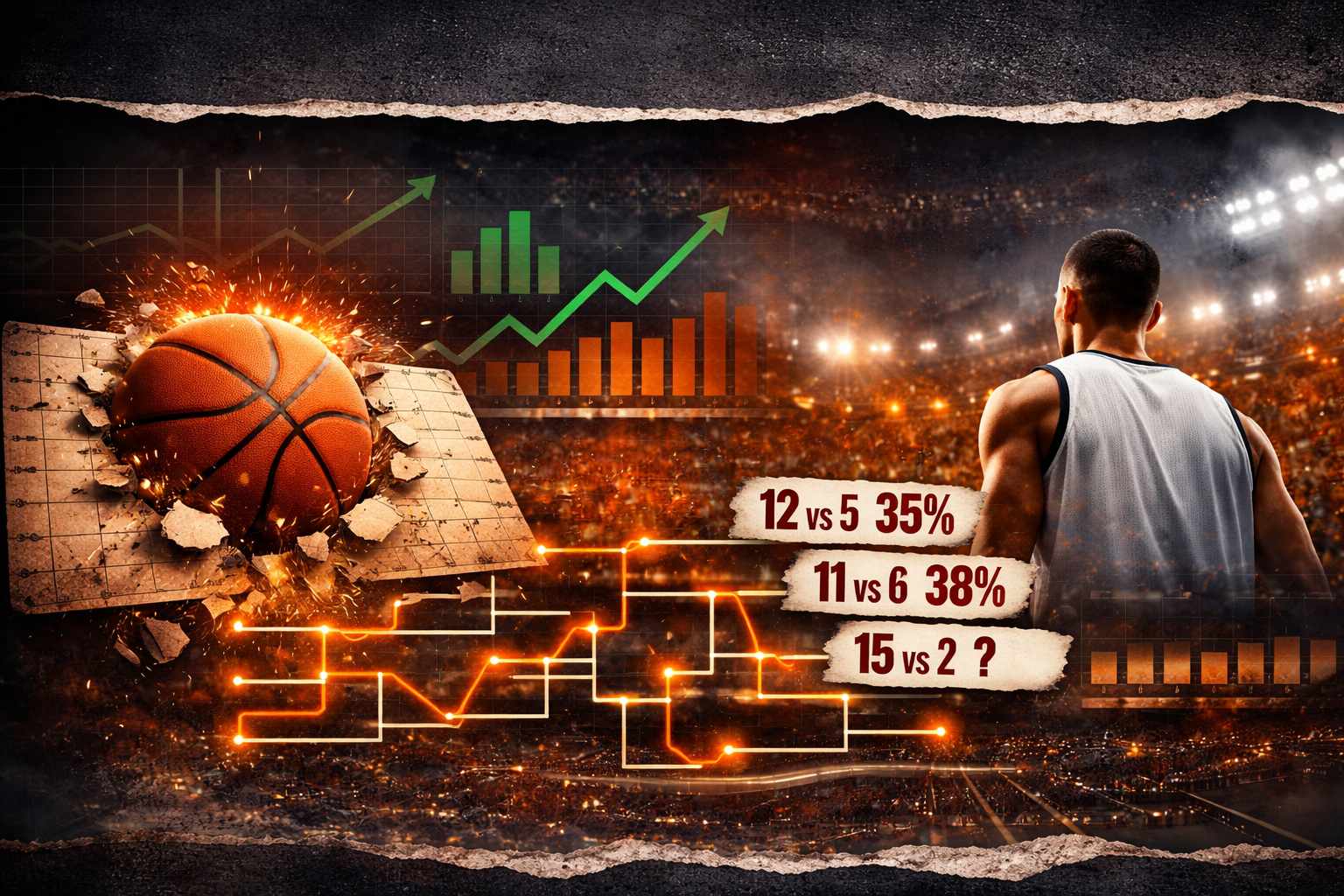
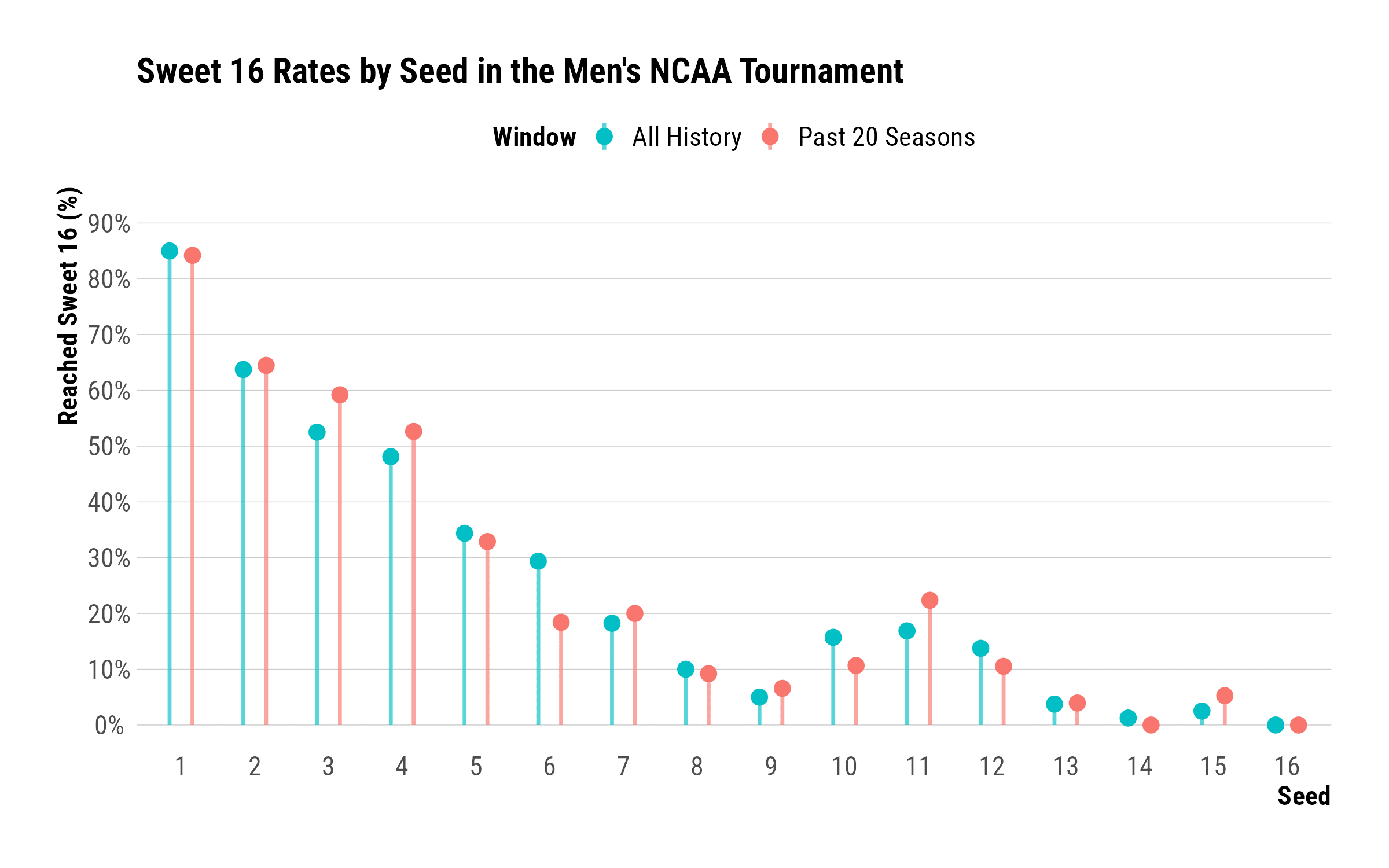
- 12 vs 5: ~35%
- 11 vs 6: ~38%
- 10 vs 7: ~40%
- 9 vs 8: ~50% (not really an upset)
- 13 vs 4: ~21%
- 14 vs 3: ~15%
- 15 vs 2: ~7%
- 16 vs 1: ~1.5% (but no longer zero)
👉 The key takeaway:
The “upset zone” is not random. It is concentrated in the 10–12 seed range.
If you’re building a bracket like a portfolio:
- These are your high-probability asymmetric bets
- Not lottery tickets, but mispriced assets
An Interesting Finding: Why 2026 Could Be More Volatile Than Average
1. Talent Distribution is Flattening
The transfer portal + NIL has created:
- Less top-heavy rosters
- More experienced mid-major teams
- Increased roster continuity outside blue bloods
This reduces the traditional talent gap premium that protected higher seeds.
👉 Translation:
The spread between a 5-seed and a 12-seed is narrower than it was 10 years ago.
2. Three-Point Variance is Dominating Outcomes
Modern college basketball is increasingly driven by:
- High-volume 3-point shooting
- Pace variability
- Shot selection volatility
A mid-major that shoots:
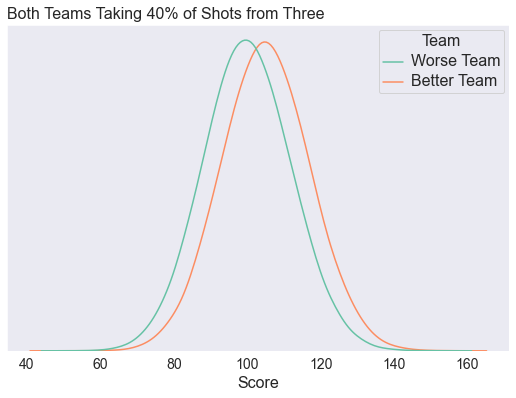
- 38% from three on high volume…can eliminate a superior team in a single-game sample size.
👉This is classic variance dominance:
In a one-game setting, randomness matters more than expected value.
3. Experience > Raw Talent in Tournament Settings
Teams with:
- Older guards
- Multi-year continuity
- Low turnover rates
…consistently outperform seed expectations.
Meanwhile:
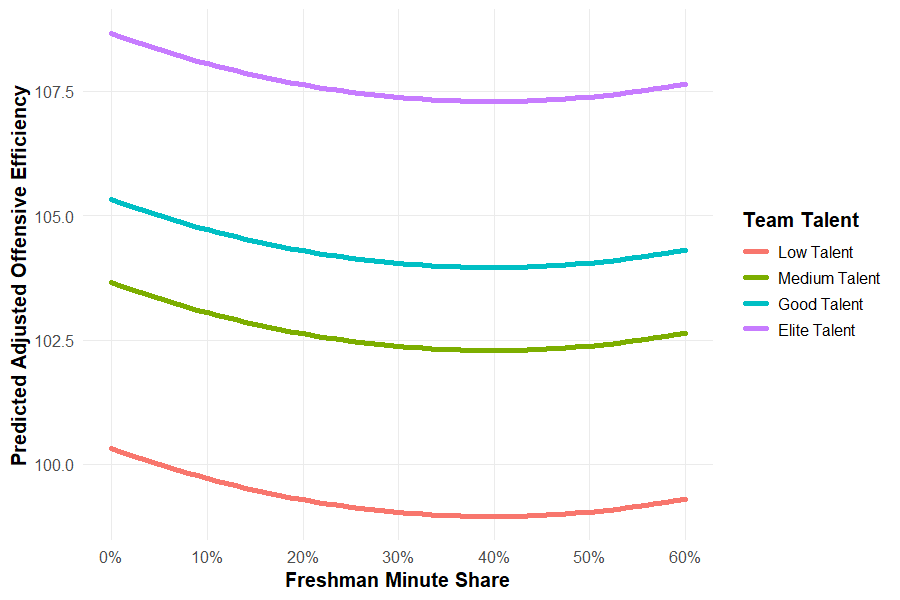
- Freshman-heavy teams
- NBA pipeline rosters
…tend to underperform in high-pressure, short-prep environments.
👉 This creates systematic mispricing in seeding.
Quant Model: Identifying Upset Candidates
If we model upset probability using key variables:
- Adjusted Offensive Efficiency (AdjO)
- Adjusted Defensive Efficiency (AdjD)
- 3PT Attempt Rate
- Turnover %
- Experience (minutes continuity)
- Free Throw Rate (late-game stability)
We can flag high-risk favorites and live underdogs.
🚨 Upset Profile (Underdog)
- Top 40 in 3PT rate
- Senior-led backcourt
- Low turnover offense
- Top 75 defense
⚠️ Fragile Favorite Profile
- Reliance on freshmen scoring
- Poor defensive rebounding
- High turnover rate
- Low 3PT volume (can’t respond to runs)
2026: Where the Upsets Could Hit
Based on current team construction trends (not just rankings), here are the likely upset zones:
12 vs 5 Games (Highest Expected Value)
These are your core upset plays.
Look for:
- Mid-majors with elite shooting
- Power conference teams with inconsistent guard play
👉 Expect 1–2 wins from 12-seeds, as usual
👉 But probability leans toward 2 this year
11 vs 6 Games (Chaos Tier)
This is where brackets break.
- 11-seeds often include under-seeded power teams or hot conference tournament winners
- These teams frequently have top-30 metrics disguised by bad variance during the season
👉 Expect 2–3 wins from 11-seeds
13 vs 4 (Selective Strike)
Not common, but highly predictable when it happens.
Target:
- Slow-paced, defensive underdogs
- Favorites that struggle in half-court offense
👉 Expect 1 upset in this category
15 vs 2 (Tail Risk Play)
Still rare, but no longer shocking.
Trigger conditions:
- Elite shooting underdog
- Favorite with turnover issues or poor guard play
👉 Probability of at least one:
~25–30% in any given tournament
Market Insight: Why the Public Gets It Wrong
Most brackets fail because people:
- Overweight brand names
- Underweight efficiency metrics
- Ignore matchup-specific variance
This is identical to:
- Overpaying for “blue chip” stocks
- Ignoring structural risks
The NCAA Tournament is not about picking the best team
It’s about pricing uncertainty correctly
Portfolio Strategy for Your Bracket
If you think like a trader:
Core Positions (High Probability)
- 1–2 twelve-seed wins
- 2 eleven-seed wins
Tactical Plays (Moderate Risk)
- 1 thirteen-seed upset
Tail Hedge (Optional)
- One 15-seed upset
Avoid:
- Overloading on longshots
- Picking multiple 1-seeds to lose early
Final Take
March Madness is not chaos. It’s structured volatility.
And in 2026, the structure points to:
- Narrower talent gaps
- Higher shooting variance
- More experienced underdogs
All of which increase the probability of meaningful bracket disruption
If you approach your bracket like a portfolio, not a fan…You won’t eliminate risk.
But you will price it better than the field.
This material has been distributed for informational purposes only and should not be considered as investment advice or a recommendation of any particular security, strategy or investment product. Information contained herein has been obtained from sources believed to be reliable, but not guaranteed. No part of this material may be reproduced in any form, or referred to in any other publication, without express written permission. ©2026 MIXED MARKET ARTIST
(Visit Fin Pro Marketing – The Best Marketing for Finance Professionals)


Billy Lee, CEO of Great White Financial, is a sportsman, businessman, artist, speaker, writer, and producer.
Billy is the Founder of the Wellness Institute for Economic Growth and Kairos Athletics.